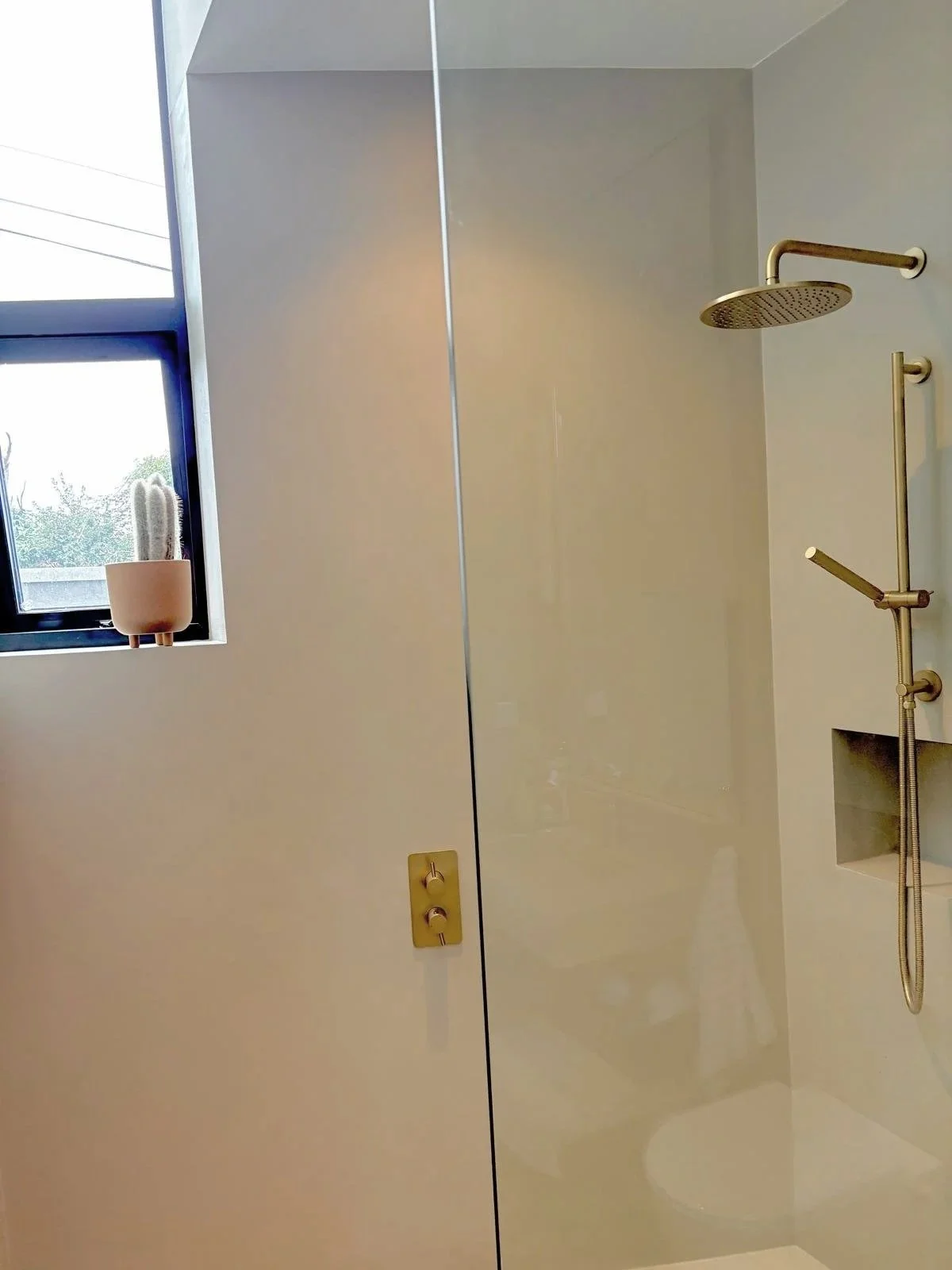
Is Microcement Waterproof?
The definitive answer on microcement waterproofing, sealants, application requirements and wet room performance.
Direct Answer
Yes, microcement is waterproof when correctly sealed with a polyurethane or epoxy sealant. The sealant must cover all surfaces including wall-floor junctions. Without sealant, microcement will absorb water and stain.
How Sealing Creates Waterproofing
Microcement in its base state is a cementitious material with inherent porosity. Without a sealing layer, it behaves like any cement-based product, absorbing moisture, staining and deteriorating when exposed to water. The waterproofing in a microcement installation comes entirely from the sealant layer applied as the final stage of the installation process.
Polyurethane sealant forms a continuous, flexible film over the microcement surface. When applied in the correct number of coats and allowed to cure fully, this film is completely impermeable to water. The flexibility of PU sealant is also important, it accommodates the minor thermal movement that occurs in any building without cracking, maintaining the waterproof barrier over time.
Epoxy sealant provides a harder, more chemically resistant waterproof film suitable for the most demanding wet environments, commercial spa pools, wet treatment rooms and heavy-use shower areas. Epoxy is less flexible than PU but provides superior abrasion and chemical resistance.
Wet Rooms and Showers
For shower areas and wet rooms, a minimum of three coats of sealant is required. Critically, the wall-floor junction, the line where wall meets floor, must be fully sealed with no gaps. This junction is the most common point of water ingress in poorly installed microcement bathrooms. Professional application includes careful attention to this detail.
What Happens Without Sealant
Unsealed microcement exposed to water will absorb the moisture and develop dark, blotchy staining patterns. These stains are very difficult to remove and in severe cases require full resanding and resealing. This is why sealant application is never optional, it is a critical, load-bearing element of the microcement system.
Sealant Types and Applications
Water-Based PU Sealant
Low odour, suitable for walls and dry residential areas. Matt, satin and gloss options. Two coats minimum for dry areas.
Solvent-Based PU Sealant
Higher durability for residential floor applications. Better resistance to footfall wear. Three coats for wet areas.
Epoxy Sealant
Maximum waterproofing and chemical resistance. Commercial and heavy-use wet areas. Two-component, mixed on site.
Anti-Slip Additive
Fine aggregate additive mixed into sealant for wet floors, showers and wet rooms. Does not significantly affect appearance.
Exterior Sealant
UV-stable sealant for outdoor and exterior microcement applications. Resistant to UV degradation.
Resealing
Bathroom wet areas should be resealed every 5-7 years. Residential floors every 7-10 years. Signs of wear include water absorption.
Frequently Asked Questions
Install Waterproof Microcement in Your Home
Contact Cementec Ireland for supply quotes and certified applicator referrals for your bathroom, shower or wet room project.
Based in Kinsale, Co. Cork · Serving all of Ireland